


-2.jpg?width=240&height=83&name=Menu-Banner%20(5)-2.jpg)
.jpg?width=240&height=83&name=Menu-Banner%20(8).jpg)





Operational efficiency isn’t just about cutting costs or speeding up workflows; it’s about building a business that runs smarter at every level. In an era where agility and precision define market leaders, the pivotal role of data in optimizing operations is undeniable. Organizations that fail to harness the power of data risk falling behind.
But achieving efficiency at scale isn’t a process problem; it’s a data problem.
From supply chains and service delivery to customer engagement and compliance, every function relies on data that is accurate, accessible, and actionable. When managed well, data becomes the engine behind intelligent decisions, predictive automation, and seamless execution.
This blog examines the transformative potential of strategic investments in data, encompassing governance, quality, AI, and other related areas. It's a journey that can revolutionize operational outcomes and lay the groundwork for sustained business performance, inspiring you to take the leap into data modernization.
Why operational efficiency matters
Operational efficiency is the ability of an organization to deliver value—whether in the form of products, services, or experiences—using the least amount of resources, time, and cost. It’s about doing more with less, without sacrificing quality or customer satisfaction.
For Fortune 1000 companies and startups alike, operational efficiency is a strategic imperative. It directly impacts profitability, agility, and competitiveness in a global market.
The power of data in driving efficiency
There’s an adage: “Knowledge is power.” In the digital age, data is knowledge, and it powers every decision, every process, and every outcome.
Below is an example of a retail supply chain:
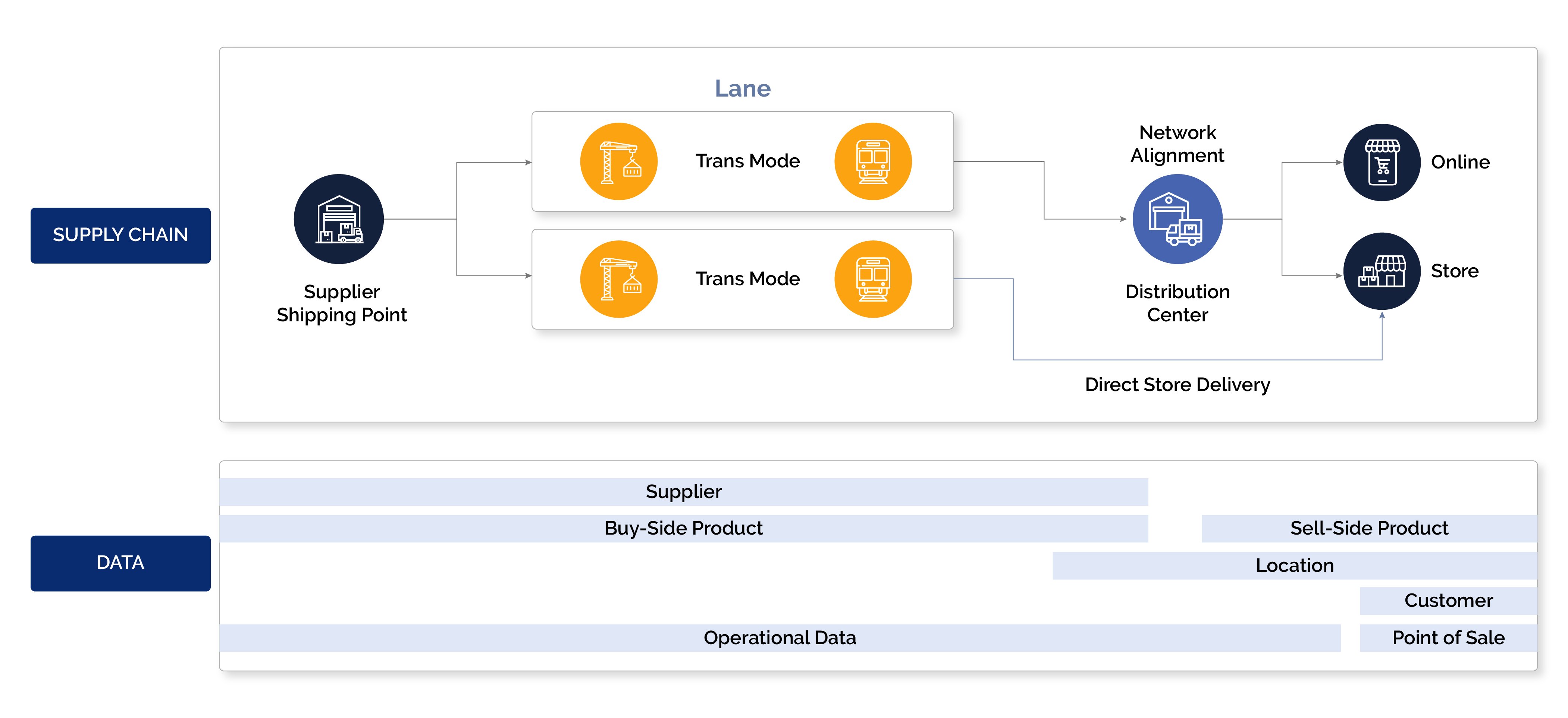
It is easy to infer from the diagram that various types of data are generated and evolve as products move through the supply chain. As data permeates every aspect of an organization, it drives insights, automation, and innovation. When properly collected, processed, and analyzed, it becomes the foundation for smarter, faster, and more efficient operations.
Common data challenges that undermine efficiency
Despite its potential, data can become a liability if not managed well. Here are some common pitfalls that hinder operational efficiency:
- Poor data quality: Inaccurate or outdated data can lead to poor decisions and costly errors.
- Data silos: Disconnected systems prevent collaboration and slow down workflows.
- Lack of governance: Without clear ownership and rules, data becomes inconsistent and unreliable.
- Manual processes: Human errors and inefficiency creep in when data handling isn’t automated.
- Legacy systems: Outdated infrastructure can’t support modern analytics or integration.
What does it mean to invest in data?
Investing in data is about building a data-first culture and not about buying new tools.
Here’s what that looks like. By understanding and embracing this, you can empower your organization and instill confidence in your data strategy.
1. Data governance and data quality
Many organizations still overlook Data Governance and Data Quality as critical elements of their data strategy. Data Governance aligns people, processes, and technology, while Data Quality ensures information is accurate, timely, and consistent. Together, they help maintain clean, reliable data over time.
Executive sponsorship is crucial for establishing a strong data culture, and regular data assessments, cleansing routines, and monitoring are vital for maintaining ongoing quality. Technologies like Data Catalogs support these efforts by defining data, tracking lineage, establishing rules, and identifying trusted sources.
When implemented effectively, data governance and data quality enhance efficiency, minimize costly errors, and increase agility, transforming data into a powerful business asset.
2. Master data management (MDM)
Master data management (MDM) focuses on creating consistency by establishing a single, reliable version of every key business entity, such as customers, products, locations, and suppliers, across the organization. By eliminating duplicate records and implementing rigorous stewardship, MDM provides a single, trusted source of truth. With effective MDM in place, decisions become clearer, and business processes operate much more smoothly.
3. Data warehousing
A modern data warehouse serves as the central nervous system for an organization’s information, seamlessly collecting data from numerous sources and transforming it into actionable insights. Instead of sifting through scattered spreadsheets or waiting for monthly reports, teams gain immediate access to unified analytics. This empowers faster decisions and relieves the burden of fragmented systems, making a robust data warehouse the secret ingredient behind agile, data-driven businesses.
4. Role of AI & machine learning
Artificial Intelligence and Machine Learning greatly expand what organizations can achieve with their data. With these technologies, companies can anticipate customer needs before they arise, adjust pricing strategies in real time, and detect emerging issues well in advance.
AI and ML enable the forecasting of outcomes, optimization of strategies, identification of hidden opportunities, and automation of repetitive tasks that once hindered progress. When combined with high-quality, well-governed data, these tools amplify business value, empowering every part of an organization to make agile, forward-thinking decisions.
The return on investment
Organizations that invest in data can experience a 10-30% improvement in key performance indicators, including operational efficiency, cost reduction, revenue growth, and decision-making agility. Continuing with the retail supply chain example, making appropriate data investments unlocks a series of significant benefits:
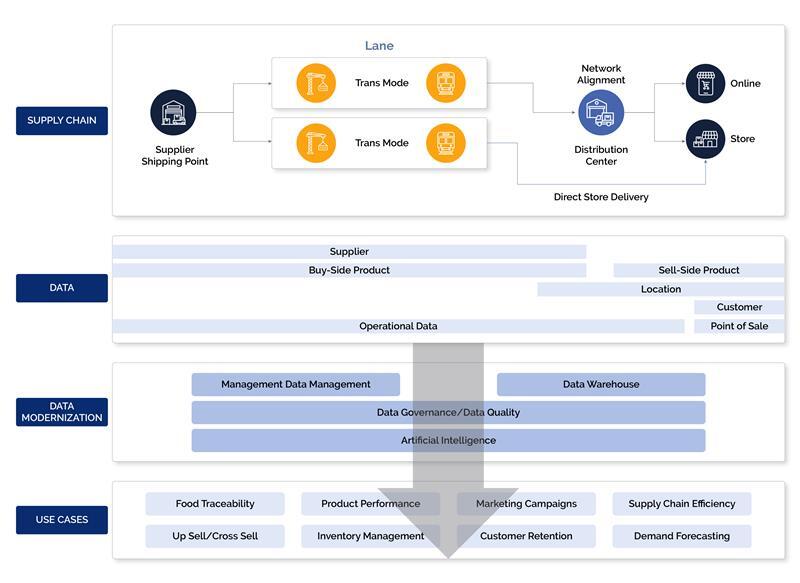
As organizations advance through data modernization, they don’t simply adapt; they evolve, gaining momentum and uncovering new opportunities at every stage.
Conclusion: Data modernization is a journey
Data Modernization is not a one-time project; it's a continuous journey. And like any journey, the right partner makes all the difference.
That’s where Mastech Digital comes in. With nearly two decades of deep expertise in data and a proven track record of helping hundreds of clients succeed, Mastech is a trusted guide on the path to operational excellence.
Organizations that treat data as a strategic asset, not just a byproduct, are the ones that thrive. The journey starts with a single step: recognizing and investing in your data.